
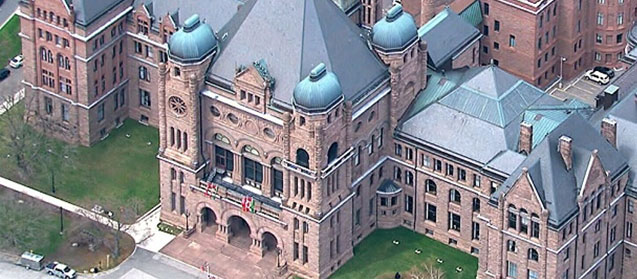
The Ontario government made a series of announcements in its 2024 Budget to strengthen the economy and reinforce the supply chain by investing in trucking labour and highway infrastructure programs.
The Ford government has committed an additional $100 million in the Skills Development Fund this year, to help job seekers, including those interested in entering the trucking industry, advance their careers.
Ontario will invest more than $62 million in two of the province’s foundational skilled trades programs to help young people explore future careers in the skilled trades, including $21 million to expand the Ontario Youth Apprenticeship Program and $42 million to launch 100 pre‑apprenticeship training projects around the province that will help young people acquire firsthand job experience.
In 2023, the OTA and the Toronto Business Development Centre (TBDC) announced the launch of the Explore Trucking Careers Program which is supported through the province’s Skills Development Fund (SDF).
Today’s announcement continues support for this critical fund.
“OTA is pleased to see this investment being made and we will be working with our partners to make sure critical programs like the Explore Trucking Careers Program continue to provide on-the-job training support in our sector,” said OTA president Stephen Laskowski.
The Ford government also reinforced its strong commitment to expand and support the province’s critical highway infrastructure and unlock economic opportunity, including in Northern Ontario. Some of the announcements reflect the sentiments gathered by OTA in its Northern Ontario Highway safety survey, which provided the government with feedback from over 1,000 truck drivers and transport workers to develop solutions that will improve highway and truck driver safety in the region.
Among the new and existing projects in Northern Ontario highlighted in the Budget:
- Supporting the construction and repair of municipal roads and bridges that connect to provincial highways through communities, including the reconstruction of Highway 101 through Timmins;
- Widening Highway 17 from Kenora to the Manitoba border;
- Resurfacing Highway 144 from north of Highway 560 northerly to Highway 661, near Gogama;
- Continuing to widen Highway 69 from two to four lanes, from Parry Sound to Sudbury;
- Expanding Highway 11/17 between Coughlin Road and Highway 582 (east junction) west of Red Rock;
- Widening Highway 11/17 between Thunder Bay and Nipigon; and
- Proceeding with the design and environmental assessment work for a 2+1 highway pilot in Northern Ontario, for two locations on Highway 11 north of North Bay. A 2+1 highway is a three‑lane highway with a centre passing lane that changes direction approximately every two to five kilometres.
In Southern Ontario, the government stated it is continuing work to widen Highway 401 easterly from Brock Road in Pickering, as well as replacing bridges in Port Hope, helping tens of thousands of drivers per day get to work and home faster, as well as get goods to market sooner. This builds on the previous work to improve the Highway 401 corridor, including the recent completion of additional lanes in Mississauga and Milton.
To support new border crossing infrastructure in Windsor, the government is building upon a new interchange connecting Highway 401 to Lauzon Parkway. Now, it will build a new interchange at Banwell Road and E.C. Row Expressway.
The budget reinforced the government’s commitment to building Highway 413 and the Bradford Bypass. OTA has championed these projects for years.
Also related, the government is planning to expand Highway 7 from two to four lanes from west of Reesor Road in Markham, east to Brock Road in Pickering, to support the development of the City of Pickering’s Innovation Corridor. This will ensure Highway 7 is a continuous four-lane highway, supporting the movement of goods and people in the region.
Other highway and roadway projects include:
- Designing a new interchange at Highway 416 and Barnsdale Road to support South Ottawa’s growing population.
- Replacement of the Frederick Street Bridge in Kitchener, environmental fieldwork, and other engineering work to support construction on the remainder of the corridor.
- The final phase of construction for the new Highway 7 between Kitchener and Guelph will provide relief to the busy Highway 401 and connect the fast‐growing urban centres of Kitchener, Waterloo and Guelph.
- Moving forward with the Queen Elizabeth Way (QEW) Garden City Skyway Bridge Twinning project, which includes construction of a new twin bridge on the QEW over the Welland Canal;
- Widening Highway 404 from Highway 407 to Major Mackenzie Drive, Markham, for high-occupancy vehicle (HOV) lanes;
- Widening Highway 3 from two to four lanes between Essex and Leamington;
- Replacing the Little Current Swing Bridge on Highway 6 in the Town of Northeastern Manitoulin and the Islands;
- Rehabilitating Highway 403 between Highway 401 and West Quarter Townline Road in Brant and Oxford Counties;
- Repairing bridges and culverts on Highway 28 in Renfrew County;
- Constructing a new interchange on Highway 6 in Wellington County as part of advance work for the Morriston Bypass;
- Rehabilitating the Bay of Quinte Skyway Bridge;
- Replacing bridges on Highway 417 in Ottawa; and
- Widening Highway 3 and Highway 4 to support growth and economic development in St. Thomas.
Additionally, the government announced in 2022 to temporarily cut the gas tax by 5.7 cents per litre and the fuel tax by 5.3 cents per litre. It will expand that policy to December 31, 2024, to help reduce the cost of gas and fuel for Ontario businesses.
“Fuel is one of the two leading costs for a trucking company. This announcement will undoubtedly help provide relief to the trucking industry,” says Laskowski.
To read the full budget click here.